
 Notice To All Users:All books of this website are for public. No files are hosted on our server, they are only indexed much like how Google, Yahoo, Bing, ect works. This site merely indexes content that is readily available all over the web. The hosting server or the administrator cannot be held responsible for the contents of any linked sites or any link contained in a linked site, or changes / updates to such sites. All materials on this website is strictly for Educational Purposes ONLY.


.jpg)




- Download | FreeAbout The File:
 File Format | PDFFile Size | 7.51 MBPages | 437
Language | EnglishCategory | ProgrammingDescription: If you're a Java programmer working with XML, you probably already use some of the tools developed by the Apache Software Foundation. This book is a code-intensive guide to the Apache XML tools that are most relevant for Java developers, including Xerces, Xalan, FOP, Cocoon, Axis, and Xindice.
Theodore Leung, a founding member of the Apache XML Project, focuses on the unique capabilities of these best-of-breed XML tools. With the help of a sample application, he demonstrates how you can use them in unison to develop professional XML/Java applications for the real world.If you need in-depth information to help you assemble a workable toolbox for developing sophisticated XML-based applications, you'll find it in this volume.In this book, you will find out about the following:How the Apache XML Project relates to Java programmingWhen you'll need some of Xerces' extra parsing features, like grammar cachingHow to use Xalan's XSLTC to compile XSLT stylesheets into JavaPrerequisites and applications for FOP and BatikCocoon concepts and developmentDevelopment techniques and practical usage for XindiceHow to develop back-end applications with XML RPC and AxisApplications and concepts for XML Security. - Download | FreeAbout The File:
.jpg) File Format | PDFFile Size | 5.79 MBPages | 502
File Format | PDFFile Size | 5.79 MBPages | 502
Language | EnglishCategory | ApacheDescription: Pro Apache XML thoroughly introduces several subprojects found under the Web Services–driven API umbrella. The book begins with a concise introduction to XML and Web Services. Subsequent chapters devote themselves to specific subprojects covering their purposes, APIs, implementation, and practical uses through appropriate code examples. Additional material includes
Introductions to several of the Apache Foundation’s hottest projects, including Xerces, Axis, and XindiceBuilding XML–driven websites using the popular Cocoon projectTransforming XML–based documents into a variety of formats, including PDF, SVG, and PS, using the Formatting Objects Processor (FOP) projectYou’lll learn to perform tasks like validation, parsing, transformation, and storage and how to work with this information through a programming interface. You may either read this book from cover to cover or jump to any desired subproject for a detailed study of its implementation. All programming examples use the Java programming language. - Download | FreeAbout The File:
 File Format | PDFFile Size | 14.1 MBPages | 697
Language | EnglishCategory | DatabaseDescription: Get thorough coverage of SQL Server 2000—including extended XML capabilities and VS.NET updates with this expertly written resource. Learn to harness the full benefits of modular programming, and achieve faster execution and a reduction of network traffic. Included are a sample database and an end-to-end solution for a Web search engine.
- Download | FreeAbout The File:
 File Format | PDFFile Size | 12.1 MBPages | 549
Language | EnglishCategory | DatabaseDescription: Discusses SQL Server 2005 XML from the server and client sides
Examines using XSLT to render the XML data that is retrieved from SQL Server, particularly for ASP.NETAddresses SQL Server relationship with schemas, SOAP, XML security, and .NETMakes extensive use of examples to solve problems that programmers face on an everyday basis and features Server 2005 XML best practices. - Download | FreeAbout The File:
 File Format | PDFFile Size | 4.58 MBPages | 883
Language | EnglishCategory | DatabaseDescription: This rich and detailed look at the many Oracle tools that support XML development shows Java and PL/SQL developers how to combine the power of XML and XSLT with the speed, functionality, and reliability of the Oracle database. The nearly 800 pages of entertaining text, helpful and time-saving hints, and extensive examples can be put to use immediately to build custom XML applications. Includes a CD-ROM with JDeveloper 3.1, an integrated development environment for Java developers.
- Download | FreeAbout The File:
 File Format | PDFFile Size | 5.38 MBPages | 570
Language | EnglishCategory | Programming WebDescription: The foundation for most Web services, XML can also be used with ASP.NET to display data from an infinite variety of sources in a Web site
After covering the basics, the book explores the many ways that XML documents can be created, transformed, and transmitted to other systems using ASP.NET 2.0Two major case studies address issues such as reading and writing XML data, XML data validation, transforming XML Data with XSLT, SQL Server XML integration, XML support in ADO.NET, and XML Web Services - Download | FreeAbout The File:
 File Format | PDFFile Size | 6.47 MBPages | 390
Language | EnglishCategory | Programming WebDescription: As ASP.NET becomes more widely adopted there is an increasing need for content that goes beyond broad overviews of this exciting new technology. This book concentrates on describing how XML can be effectively used within ASP.NET applications. Coverage includes discussion of where and when to use XML, detailed discussion of the System.XML namespace, ADO.NET as it relates to ASP.NET, SQL Server 2000 and SQLXML managed classes, and XSLT. Furthermore the book specifically spends time highlighting new developments in XML related standards and technologies, and performance issues that the advanced ASP.NET developer should be aware of.
- Download | FreeAbout The File:
 File Format | PDFFile Size | 2.21 MBPages | 497
Language | EnglishCategory | Programming WebDescription: XML for ASP.NET Developers first gives a solid foundation in the basics of MSXML including XML Syntax, XML Schemas, Xpath, Xlink, Xpointer, and other concepts necessary to leverage the power of XML. After the building blocks of XML are thoroughly covered, Dan guides readers through manipulating XML documents using the Document Object Model (DOM) and XSL (Extensible Stylesheet Language) both on the client and the server. Detailed examples combined with easy to follow tutorials will have readers transforming XML documents into professional looking applications quickly and easily. Providing a single source for information on a variety of XML related technologies makes XML for ASP.NET Developers a necessary edition to any developer's library and sets it apart from any book available today.
- Download | FreeAbout The File:
 File Format | PDFFile Size | 2.17 MBPages | 466
Language | EnglishCategory | Programming WebDescription: XML Web services are the next logical step in the evolution of the Internet. Teach yourself how to write and deploy XML Web services for Microsoft® .NET—one step at a time—with this modular, accessible tutorial. It delivers expert, task-based instruction plus a real-world XML service example to help you apply what you already know about Microsoft Visual C#™, Microsoft Visual Basic® .NET, and object-oriented programming so that you can learn XML Web services development at your own pace. Topics covered include:
UNDERSTANDING XML WEB SERVICESXML Web services architectureXML Web services protocolsWeb Service Description Language (WSDL)Discovering XML Web servicesBUILDING XML WEB SERVICESWriting .NET XML Web servicesTesting XML Web servicesDebugging XML Web servicesCONSUMING XML WEB SERVICESDiscovering XML Web servicesGenerating a proxy classCreating clients that consume XML Web servicesConsuming XML Web services asynchronouslyConsuming XML Web services with HTTPADVANCED XML WEB SERVICESManaging XML Web service stateSecuring XML Web servicesUsing data sets with XML Web servicesUsing SOAP headers - Download | FreeAbout The File:
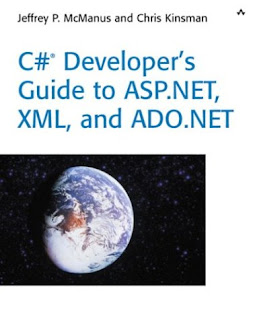 File Format | PDFFile Size | 4.45 MBPages | 230
Language | EnglishCategory | Programming WebDescription: Topics covered in this book include: the .NET Foundation Classes that are most used by developers--ASP.NET, XML, and ADO.NET, and details about the construction of Web Services and how they programmatically communicate with each other.
- Download | FreeAbout The File:
.jpg) File Format | PDFFile Size | 6.71 MBPages | 545
File Format | PDFFile Size | 6.71 MBPages | 545
Language | EnglishCategory | Programming DelphiDescription: This XML guide explains how to apply the power and flexibility of Delphi to XML, and provides a solid introduction to the technologies that make up XML and its related specifications.
- Download | FreeAbout The File:
 File Format | PDFFile Size | 1.0 MBPages | 158
Language | EnglishCategory | Programming Perl, XmlDescription: XML is a text-based markup language that has taken the programming world by storm. More powerful than HTML yet less demanding than SGML, XML has proven itself to be flexible and resilient. XML is the perfect tool for formatting documents with even the smallest bit of complexity, from Web pages to legal contracts to books. However, XML has also proven itself to be indispensable for organizing and conveying other sorts of data as well, thus its central role in web services like SOAP and XML-RPC.
As the Perl programming language was tailor-made for manipulating text, few people have disputed the fact that Perl and XML are perfectly suited for one another. The only question has been what's the best way to do it. That's where this book comes in.Perl & XML is aimed at Perl programmers who need to work with XML documents and data. The book covers all the major modules for XML processing in Perl, including XML::Simple, XML::Parser, XML::LibXML, XML::XPath, XML::Writer, XML::Pyx, XML::Parser::PerlSAX, XML::SAX, XML::SimpleObject, XML::TreeBuilder, XML::Grove, XML::DOM, XML::RSS, XML::Generator::DBI, and SOAP::Lite. But this book is more than just a listing of modules; it gives a complete, comprehensive tour of the landscape of Perl and XML, making sense of the myriad of modules, terminology, and techniques.This book covers:parsing XML documents and writing them out againworking with event streams and SAXtree processing and the Document Object Modeladvanced tree processing with XPath and XSLT - Download | FreeAbout The File:
 File Format | PDFFile Size | 13.6 MBPages | 519
Language | EnglishCategory | Programming WebDescription: Web Standards: Mastering HTML5, CSS3, and XML provides solutions to the most common website problems, and gives you a deep understanding of web standards and how they can be applied to improve your website. You will learn how to create fully standards-compliant websites and provide search engine-optimized Web documents with faster download times, accurate rendering, correct appearance and layout, lower development cost, approved accessibility, backward and forward compatibility, and easy maintenance and content updating. The book covers all major Web standards, focusing on syntax, grammar, recommended annotations, and other standardization concerns.
Web Standards: Mastering HTML5, CSS3, and XML is also a comprehensive guide to current and future standards for the World Wide Web. As a web developer, you'll have seen problems with inconsistent appearance and behavior of the same site in different browsers. Web standards can and should be used to completely eliminate these problems. Web Standards: Mastering HTML5, CSS3, and XML describes how you can make the most of web standards, through technology discussions as well as practical sample code that you can use for your own sites and web applications. It also provides a quick guide to standard website creation for Web developers.Learn techniques and best practices to achieve full standards complianceWrite valid markup, styles, and news feeds from scratch or standardize websites by redesignRestrict markup to semantics and provide reliable layoutWhat you’ll learnThe importance and benefits of Web standardsHow to write valid markup from scratchThe most up-to-date standards, rather than non-finalized specificationsHow to provide meaningful semantics and machine-readable metadataHow to restrict markup to semanticsHow to achieve full standard compliance reasonably - Download | FreeAbout The File:
.jpg) File Format | PDFFile Size | 4.91 MBPages | 460
File Format | PDFFile Size | 4.91 MBPages | 460
Language | EnglishCategory | Programming WebDescription: The Easy, Example-Based Guide to Ajax for E veryWeb Developer Using Ajax, you can build Web applications with the sophistication and usability of traditional desktop applications and you can do it using standards and open source software. Now, for the first time, there's an easy, example-driven guide to Ajax for every Web and open source developer, regardless of experience. Edmond Woychowsky begins with simple techniques involving only HTML and basic JavaScript. Then, one step at a time, he introduces techniques for building increasingly rich applications. Don't worry if you're not an expert on Ajax's underlying technologies; Woychowsky offers refreshers on them, from JavaScript to the XMLHttpRequest object. You'll also find multiple open source technologies and open standards throughout, ranging from Firefox to Ruby and MySQL. You'll not only learn how to write "functional" code, but also master design patterns for writing rocksolid, high-performance Ajax applications. You'll also learn how to use frameworks such as Ruby on Rails to get the job done fast. Learn how Ajax works, how it evolved, and what it's good for Understand the flow of processing in Ajax applications Build Ajax applications with XML and the XMLHttpRequest object Integrate back-end code, from PHP to C# Use XSLT and XPath, including XPath Axis Develop client-side Ajax libraries to support code reuse Streamline development with Ruby on Rails and the Ruby programming language Use the cross-browser HTML DOM to update parts of a page Discover the best Ajax Web resources, including Ajax-capable JavaScript libraries.
- Download | FreeAbout The File:
.jpg) File Format | PDFFile Size | 7.10 MBPages | 392
File Format | PDFFile Size | 7.10 MBPages | 392
Language | EnglishCategory | Programming WebDescription: Oracle Database gets high marks for performance, reliability, and scalability. Building and deploying your PHP applications on Oracle Database enables you to combine the power and robustness of Oracle and the ease of use, short development time, and high performance of PHP. When used in a complementary way, PHP and Oracle allow you to build high-performance, scalable, and reliable data-driven Web applications with a minimum of effort.
When building a PHP/Oracle application, you have two general options. The first is to use an Oracle database just to store data, performing all the operations on that data on the client side; the other is to use the database not only to store data, but also to process it, thus moving data processing to the data. While building the key business logic of a database-driven PHP application inside the database is always a good idea, you should bear in mind that not all of the databases available today allow you to do. The Oracle database, which offers record-breaking performance, scalability, and reliability, does. The partnership of Oracle and the open-source scripting language PHP is an excellent solution for building high-performance, scalable, and reliable data-driven web applications.This 100% practical book is crammed full of easy-to-follow examples. It provides all the tools a PHP/Oracle developer needs to take advantage of the winning combination. It addresses the needs of a wide spectrum of PHP/Oracle developers, placing the emphasis on the most up-to-date topics, such as new PHP and Oracle Database features, stored procedure programming, handling transactions, security, caching, web services, and Ajax.This practical book is built entirely around example code, covering the most popular and up-to-date topics on using PHP in conjunction with Oracle. The book explains in extensive detail how to build robust, efficient, and secure PHP/Oracle solutions. - Download | FreeAbout The File:
.jpg) File Format | PDFFile Size | 9.09 MBPages | 455
File Format | PDFFile Size | 9.09 MBPages | 455
Language | EnglishCategory | Programming WebDescription: Don't waste time on 1,000-page tomes full of syntax; this book is all you need to get ahead in XML development. Renowned web developer Sas Jacobs presents an essential guide to XML. Beginning XML with DOM and Ajax is practical and comprehensive. It includes everything you need to know to get up to speed with XML development quickly and painlessly.
Jacobs begins by presenting an overview of XMLits syntax, rules, vocabularies, and the hows and whys of validity. She also covers the current state of XML support in todays web browsers. Next, Jacobs covers all of the basic essential uses of XML. You’ll learn how to display XML data using CSS, and transform XML data using XSLT. You’ll even learn about dynamic XML scripting using the XML DOM.The last part of the book covers advanced server-side XML uses in real-world applications, including displaying XML data in Flash, and XML-driven PHP and ASP.NET applications. And last but not least, Jacobs provides a perfect introduction to Ajax development. - Download | FreeAbout The File:
 File Format | PDFFile Size | 3.84 MBPages | 936
Language | EnglishCategory | Programming WebDescription: Pro PHP XML and Web Services is the authoritative guide to using the XML features of PHP 5 and PHP 6. No other book covers XML and Web Services in PHP as deeply as this title. The first four chapters introduce the core concepts of XML required for proficiency, and will bring you up to speed on the terminology and key concepts you need to proceed with the rest of the book. Next, the book explores utilizing XML and Web Services with PHP5. Topics include DOM, SimpleXML, SAX, xmlReader, XSLT, RDF, RSS, WDDX, XML-RPC, REST, SOAP, and UDDI.
- Download | FreeAbout The File:
 File Format | PDFFile Size | 4.58 MBPages | 883
Language | EnglishCategory | Programming WebDescription: This rich and detailed look at the many Oracle tools that support XML development shows Java and PL/SQL developers how to combine the power of XML and XSLT with the speed, functionality, and reliability of the Oracle database. The nearly 800 pages of entertaining text, helpful and time-saving hints, and extensive examples can be put to use immediately to build custom XML applications. Includes a CD-ROM with JDeveloper 3.1, an integrated development environment for Java developers.
Review:Aimed at Oracle professionals planning or doing XML work, this in-depth guide, covering Oracle8 and Oracle8i, comes from Oracle's lead XML technical evangelist, Steve Muench. No prior knowledge of XML is required to dive into the book, but readers are assumed to be familiar with SQL and with programming using Java or PL/SQL. - Download | FreeAbout The File:
 File Format | PDFFile Size | 19.0 MBPages | 1255
Language | EnglishCategory | Programming WebDescription: When the first edition of this book was written, XML was a relatively new language but already gaining ground fast and becoming more and more widely used in a vast range of applications. By the time of the second edition, XML had already proven itself to be more than a passing fad, and was in fact being used throughout the industry for an incredibly wide range of uses. With the third edition, it was clear that XML was a mature technology, but more important, it became evident that the XML landscape was dividing into several areas of expertise. Now in this edition, we needed to categorize the increasing number of specifications surrounding XML, which either use XML or provide functionality in addition to the XML core specification.
So what is XML? It's a markup language, used to describe the structure of data in meaningful ways. Anywhere that data is input/output, stored, or transmitted from one place to another, is a potential fit for XML's capabilities. Perhaps the most well-known applications are web-related (especially with the latest developments in handheld web access—for which some of the technology is XML-based). However, there are many other non-web-based applications for which XML is useful—for example, as a replacement for (or to complement) traditional databases, or for the transfer of financial information between businesses. News organizations, along with individuals, have also been using XML to distribute syndicated news stories and blog entries.This book aims to teach you all you need to know about XML—what it is, how it works, what technologies surround it, and how it can best be used in a variety of situations, from simple data transfer to using XML in your web pages.

.jpg)


.jpg)


.jpg)
.jpg)
.jpg)


Subscribe to:Posts (Atom)


